

Many congratulations for having discovered your why. You’re now ready to take the next step.
As we move forward in the journey, it’s essential to know what you exactly need and what you don’t. Many aspiring entrepreneurs hold themselves back due to misconceptions around what it takes to succeed. In reality, you don’t need much as you may think.
What you need
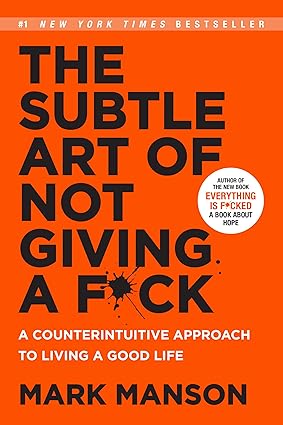
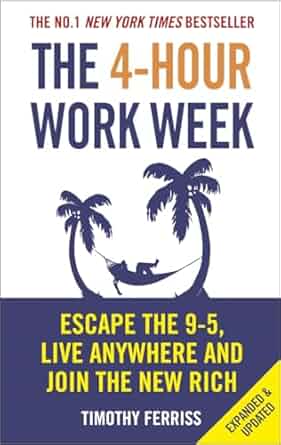
First things first, the power of mindset which we have already discussed in our 1st edition. I sincerely hope you had a time to buy and read those couple of life altering books.
If reading a 250-page book is heavier than climbing mount Kilimanjaro, you have the option to read the 6 page summary available on my website (www.venturemozart.com).
(ab itna to karna hi hoga)
The very next in the list is your “why” which is the underlying purpose, passion, and motivation that drives you to start and grow a business. It’s the reason you get out of bed in the morning, the fire that burns within you, and the guiding force behind your entrepreneurial journey.
Although 7 days is a good enough time to live the process but if are still stuck on “How”, use the following framework:
– Reflect on your values: What matters most to you? What do you stand for?
– Explore your passions: What activities do you enjoy? What topics do you find most interesting?
– Identify your strengths: What are your natural talents? What skills have you developed over time?
– Consider your impact: What kind of impact do you want to make? What difference do you want to create?
– Ask yourself questions: What gets me excited? What makes me feel alive? What do I want to achieve?
Once you’ve discovered your “why,” craft a statement that captures the essence of your purpose, passion, and motivation and is not more than 1-2 sentences long, easey to remember and becomes the source of your motivation.
DM me your “Why” if you feel the need for validation.What’s next? Now that you have clarity on your “needs” it’s time to explore what you “don’t need” to succeed as an entrepreneur.
What you don’t need
You might be wondering what it takes to get started. The good news is that the list of prerequisites (what you need) is pretty basic but the list of what you “do not” need is far longer. This is important because many people think that the ability to earn money by launching your own venture requires tons of resources. Luckily, all these perceptions are no more than a myth. Let’s get this out of the way right from the start:
you don’t need much money
The first and foremost myth is that you need to raise capital from investors to launch your business. This notion itself can’t be farther from the truth. The process I’ll show you in the days ahead does not actually require a large amount of money.
You don’t believe me, read book “The $100 Startup” from author Chris Guillebeau.
Even if you do, there is enough money being offered by the central and state governments purely in the form of grants (with no obligation to return) which is upto INR 1 crore or even more in some cases.
I am sure you would call this money good enough to launch and sustain your startup. And if you are able to build a decent enough sensible business (read repeatable and scalable) with this kind support, you will find VC’s making a beeline to invest in your venture.
you don’t need to take too much risk
Conventional wisdom says that entrepreneurship is all about taking bold risks and facing uncertainty head-on. However, this narrative can be misleading.
While it’s true that some level of risk is inherent in any startup venture, the key is to take calculated risks that are informed by data, research, and a deep understanding of your market.
In reality, successful founders are not reckless gamblers, but rather calculated risk-takers who weigh their options carefully and make informed decisions. As the saying goes, “thoda bahut risk to Spiderman ko bhi lena padta hai” – even Spiderman needs to take some level of risk to save the day!
But, the difference lies in taking smart risks that are aligned with your goals and values, rather than taking unnecessary leaps of faith. By adopting a more measured approach to risk-taking, founders can minimize their exposure to unnecessary danger and maximize their chances of success.
you don’t need a business degree
Founders need to be from IIT or IIM to start and run a successful startup is just a myth. While formal education can certainly provide valuable knowledge and skills, it’s no guarantee of entrepreneurial success. In fact, many of the world’s most successful entrepreneurs, from Steve Jobs to Richard Branson, are college dropouts or never attended business school. What’s more important than a degree is a willingness to learn, adapt, and innovate.
Entrepreneurs who are passionate about solving real-world problems and are willing to put in the hard work to make it happen are the ones who will ultimately succeed, regardless of their educational background.
you don’t need employees
The traditional notion that a successful startup requires a team of employees is a relic of the past.
With the rise of AI and many other productivity tools, it’s now possible for entrepreneurs to build and grow successful companies without hiring a single employee. In fact, many successful startups, such as WordPress and Mailchimp, were founded and grown by solo entrepreneurs who leveraged technology and partnerships to scale their businesses.
By embracing the solo entrepreneur model, founders can maintain control, reduce overhead costs, and focus on high-leverage activities that drive growth and innovation. So, don’t assume that you need a team to get started – with the right mindset and tools, you can achieve remarkable things on your own.
Happy venture building!
Abhishek Tiwari